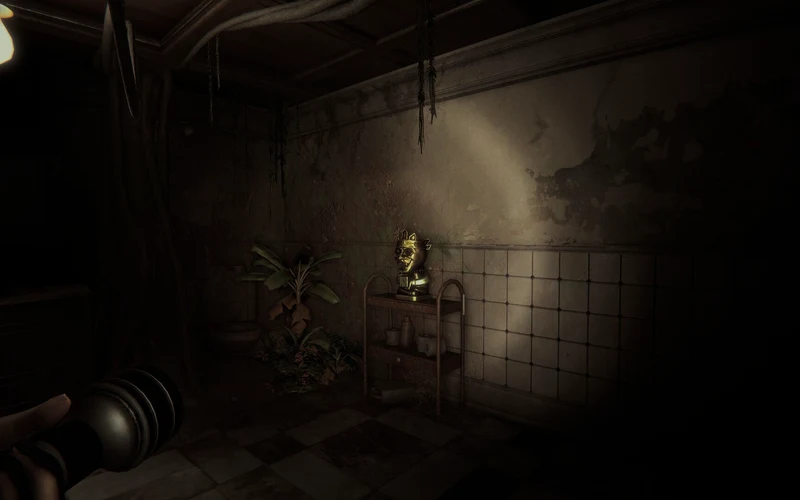
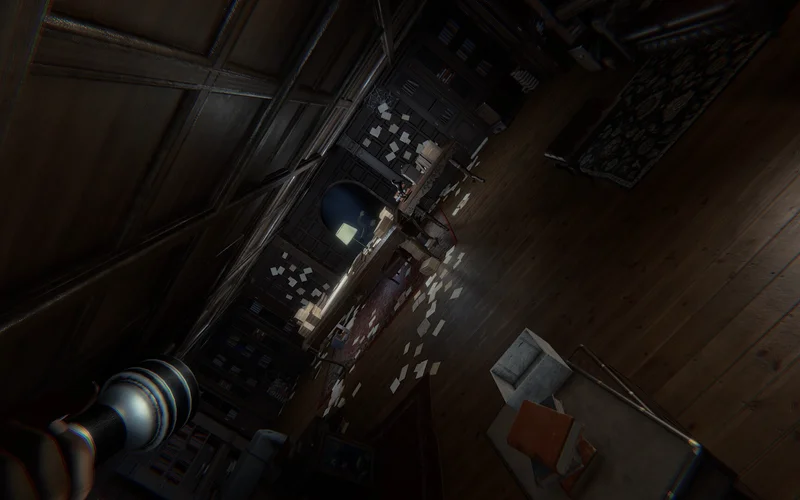
Core Gameplay Loop: The Cursed Board Game
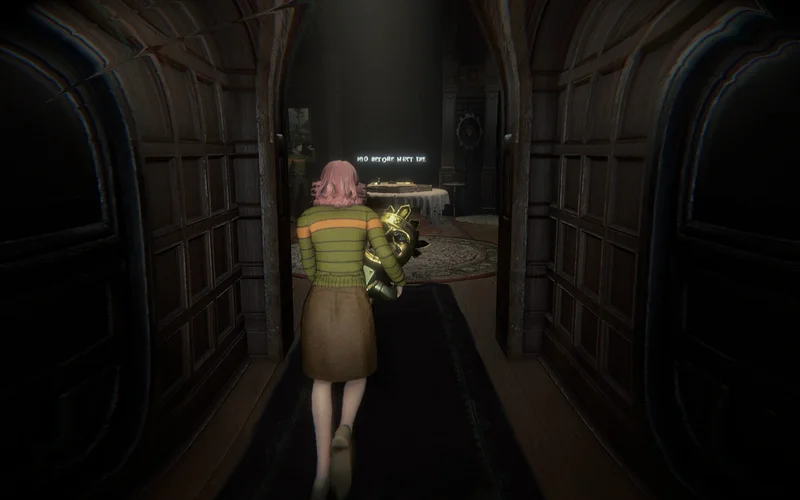
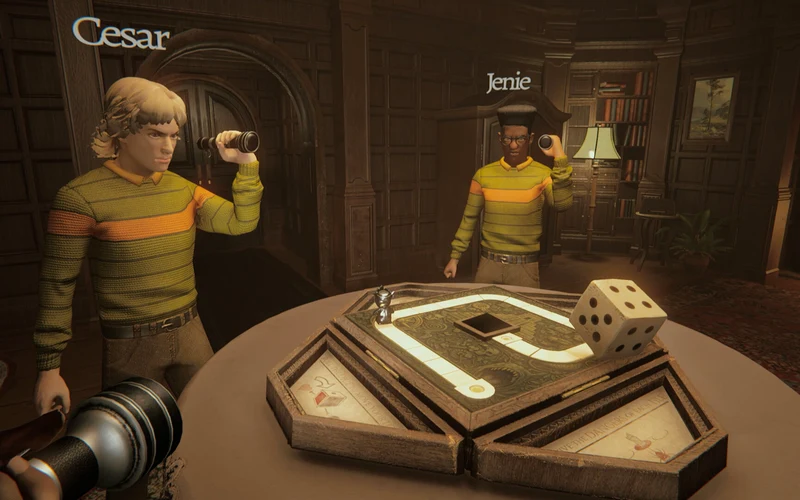
The official Steam store page and developer interviews establish Invokyr as a cooperative psychological survival horror title engineered around a sinister 1970s tabletop artifact—bringing the high-stakes tabletop dread of a dark Jumanji into an immersive co-op horror experience:
“On the table sits a 1970s board game, dusty but humming with energy… Once a beloved toy, the Gamemaster now rules this abandoned house. Escape is possible but only if you play.”
To escape this metaphysical prison, your squad must locate single-use dice across shifting wings, advance tokens at the central table, and survive whatever horrors manifest.
| Tactical Dimension | Verified Official Mechanism | Operational Constraint | Survival Protocol |
|---|---|---|---|
| Session Objective | Reach final board tile to unlock freedom | Single session run with full wipe reset | Rotate runners to recover single-use dice |
| Dice Scarcity | Dice scattered in rooms; single-use only | Every roll permanently consumes the die | Prioritize low-danger rooms before deep biomes |
| Summon Dynamic | Rolls trigger unpredictable supernatural events | 20+ events and 15+ monsters manifest | Clear withdrawal routes prior to rolling |
| Squad Structure | 1 to 6 players in online cooperative lobbies | Permadeath risk during active hunt phases | Maintain minimum two-player buddy pairs |
| Meta Loop | Score earned from survival spent in Shop | Run failure resets current board progress | Bank score into permanent upgrades and gadgets |
From an operational standpoint, this core matrix illustrates why passive play is actively fatal in Invokyr. The primary resource bottleneck is the single-use nature of all recovered dice, which forces squads to constantly trade defensive positioning for hazardous exploration. Squads that attempt to hunker near the central table rapidly starve of rolling resources, while uncoordinated teams that scatter blindly get picked off by roaming horrors. The optimal balance demands establishing a secured perimeter around the board room, dispatching tethered pairs to sweep adjacent chambers, and pooling dice before executing consecutive rolls.
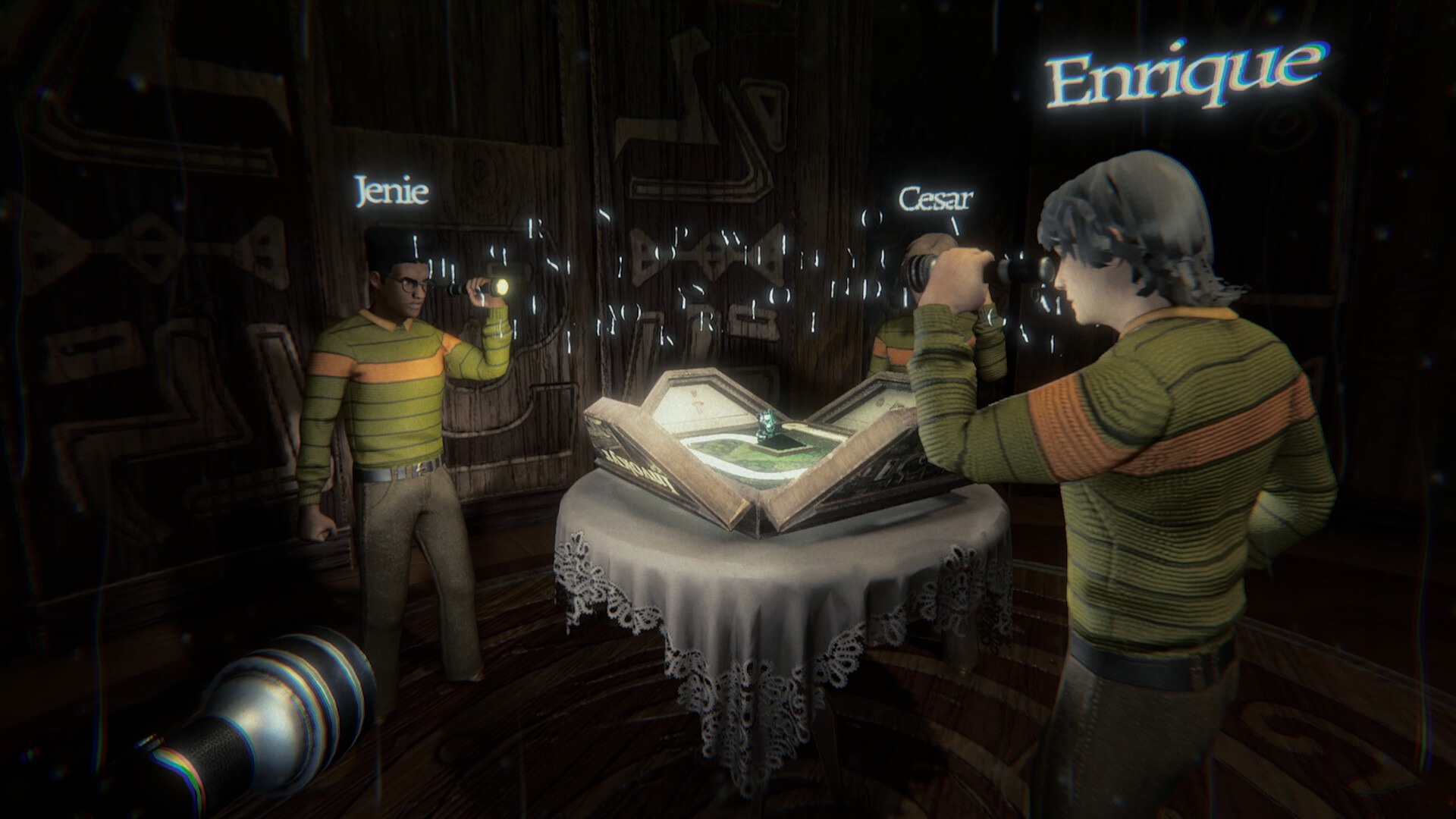
Once the core loop clicks, follow the step-by-step walkthrough to see these rules applied to a full run.
1. Scouring the House for Movement Resources
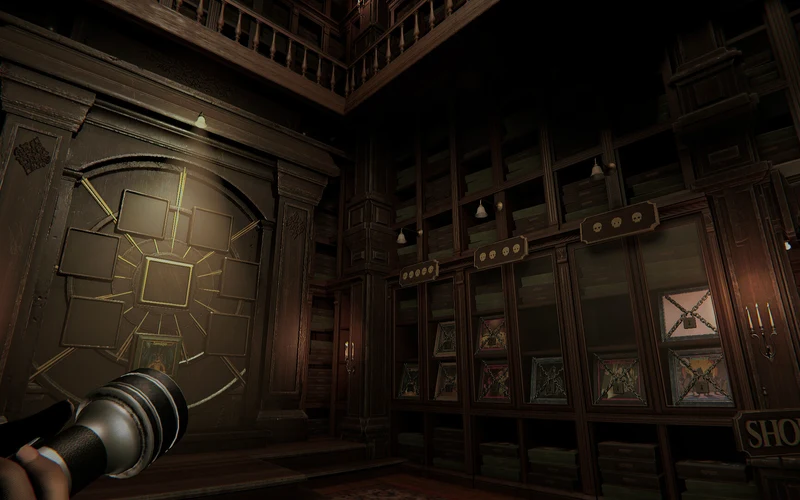
- “Scour the house to recover the dice hidden within.”
- “Each can only be used once. Choose wisely.”
1.1 Managing the Single-Use Dice Bottleneck
Because dice expire after one throw, squads must separate numeric movement dice from high-potency special dice.
| Phase Step | Primary Objective | Active Hazards | Squad Formation | Resource Priority |
|---|---|---|---|---|
| Initial Sweep | Clear immediate perimeter around board table | Minor ambient traps and locked thresholds | Full squad radial sweep | Standard numeric movement dice |
| Biome Incursion | Penetrate themed wings (Jungle, Ice Mountain) | Wandering predatory entities and terrain slows | 2-player buddy teams | Golden idols and high-value special dice |
| Dice Consolidation | Return collected items to central board table | Intercepting Gamemaster event spawns | Staggered perimeter defense | Inventory transfer to primary roller |
| Board Execution | Roll accumulated dice to trigger movement | Simultaneous entity summoning spikes | 360-degree room watch | Defensive gadgets and escape routes primed |
| Extraction Sprint | Navigate final corridor toward board victory | Enraged boss creatures and environmental collapse | Unified squad sprint | Sacrificial holding actions if necessary |
Analyzing this tactical progression sequence reveals that the most severe casualty spike occurs during the transition between biome incursion and dice consolidation. Players burdened with multiple recovered dice suffer pronounced movement friction and struggle to orient within shifting corridor geometry, leaving them acutely vulnerable to ambush encounters. Designating a dedicated board anchor who remains stationed near the main chamber provides returning scouts with an active auditory waypoint. This positioning discipline drastically mitigates disorienting deaths in blind labyrinth dead-ends while ensuring recovered movement assets are transferred safely before entity hunt phases initiate.
1.2 The Golden Idol Requirement: Progression Necessity vs Score Misconception
A critical tactical misunderstanding common among novice squads is treating the Golden Idols found in deep biomes merely as optional bonus collectibles for score farming.
In the official game loop, assembling and bringing back golden idols to the central board table is the mandatory progression requirement to satisfy board conditions and break the Gamemaster’s curse. While surviving rounds awards banked score for the Shop, you cannot complete the board run or trigger the final extraction sequence without securing the designated golden idols. Squads must treat idol recovery as a primary mission objective alongside single-use dice retrieval.
2. Special Dice: Utility vs Risk Tradeoffs
- “Some dice offer powers to heal, hide, or hinder those who hunt you, but nothing comes without risk.”
2.1 Strategic Activation vs Tactical Hoarding
When recovering a special die, burning it early squanders endgame utility, while hoarding risks losing it upon death.
| Special Die Utility | Intended Tactical Function | Inherent Systemic Backlash | Optimal Deployment Window |
|---|---|---|---|
| Healing Die | Restores injured teammates from critical states | Emits distinct audio signature audible to monsters | Post-encounter triage behind sealed doors |
| Hiding Die | Temporarily cloaks user presence from line-of-sight | Restricts user movement speed and vision clarity | Breaking aggressive predator pursuit |
| Hindering Die | Slows or snares pursuing Gamemaster summons | May trigger secondary room lockouts or traps | Bottleneck corridors during extraction runs |
| Chaos Die | Re-rolls environmental modifiers or event states | High probability of escalating threat tier | Last-ditch gamble when facing lethal wipe |
| Sacrificial Die | Grants massive movement surge to chosen player | Inflicts severe vulnerability on remaining squad | Final tile sprint when board victory is within reach |
Evaluating special dice deployment highlights a critical return-on-investment principle: utility dice must never be triggered proactively or casually during routine exploration. Because every power activation emits distinct audio harmonics, illumination flares, or secondary curse triggers, utilizing a healing or cloaking die inside an uncleared corridor frequently draws nearby predators directly toward your squad. Tactical efficiency dictates holding hindering dice exclusively for narrow threshold choke points, while reserving precious healing capabilities until after an active entity pursuit has concluded and doors are firmly secured.
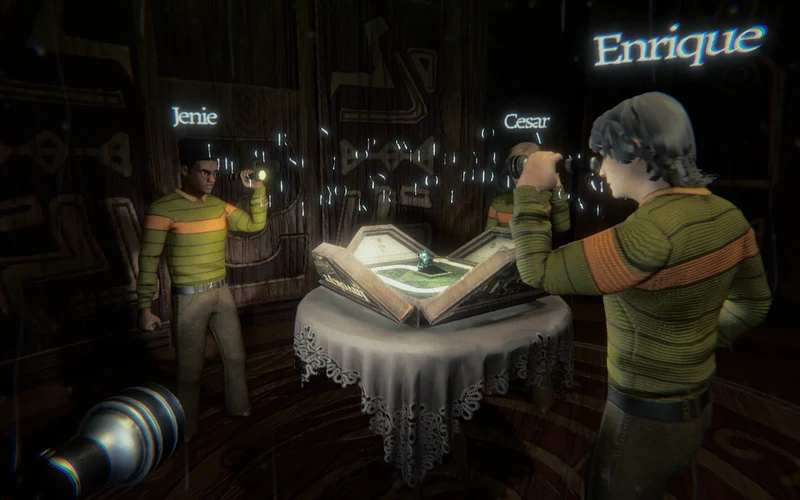
Dice are the heart of every decision — the dice mechanics guide explains collection and single-use rules in depth.
3. Teamwork & Downed Player Protocols
- “Work together… or leave someone behind. Death is not always the end.”
Revive calls and retreat callouts only work over live squad comms. If nobody can hear you in the lobby, fix the input side first with the Invokyr mic not working fixes before the squad commits to a wing.
3.1 The Downed Player Dilemma: Revive or Sacrifice?
When a teammate falls, the squad must decide whether to attempt a revival or press toward the board.
| Squad Configuration | Recommended Role Division | Communication Protocol | Wipe Risk Level |
|---|---|---|---|
| Solo / Duo (1-2) | Extreme stealth, zero combat engagement | Minimal audio, close proximity | Extreme (single mistake ends session) |
| Trio / Quad (3-4) | 2 scouts, 1 anchor, 1 flexible support | Call out entity sightings and door seals | Balanced (moderate margin for error) |
| Full Squad (5-6) | 3 scouts, 1 anchor, 1 entity bait, 1 medic | Dedicated roles, strict radio discipline | Controlled (resilient against isolated deaths) |
| Post-Down Triage | 1 distractor draws aggro, 1 executes revival | Confirm monster trajectory before approaching | Elevated (ambush during rescue animation) |
| Terminal Sacrifice | Abandon fallen ally to secure final board roll | Silent sprint toward board room terminus | Strategic calculated gamble |
Strategic evaluation of multiplayer squad dynamics proves that rushed, uncoordinated rescue attempts cause the vast majority of preventable team wipes. When an operative collapses in a remote corridor, predatory entities routinely establish patrol loops around the casualty. Despatching multiple squad mates simultaneously creates an attractive multi-target cluster. Safe operational procedure requires a single designated decoy to intentionally lure the stalking creature into an adjacent loop, while the primary medic moves in silently to complete the revive interaction uninterrupted. Maintaining this triage discipline preserves squad strength for high-risk extraction phases.
3.2 Near Death Curse Item Rule & Board Progression (Patch V0.44.7)
Understanding how the game handles death and session progress resolves common beginner frustrations regarding “locked” boards and lost equipment:
- Near Death Item Retention: Under official updates in Patch V0.44.7, players cursed by the Near Death condition no longer drop their carried tools and dice. When you collapse, your loadout remains locked to your inventory so teammates can revive you without scavenging dropped gear off dark floors.
- Door Lockout Prevention: All living operatives must be present in or near the central parlor when throwing dice to transition phases; entering board gates together prevents the parlor door from locking isolated teammates outside.
- Board Progression vs Session Resets: Invokyr is structured around distinct board campaigns (Haunted Manor, Jungle, Icy Mountain, Desert). Surviving all turns of a board defeats that specific chapter and banks your score into the permanent meta Shop. Failing mid-run resets the current board’s active roll progress, but your earned Shop upgrades, unlocked gadgets, and furniture persist permanently.
4. Biome Traversal and Environmental Hazards
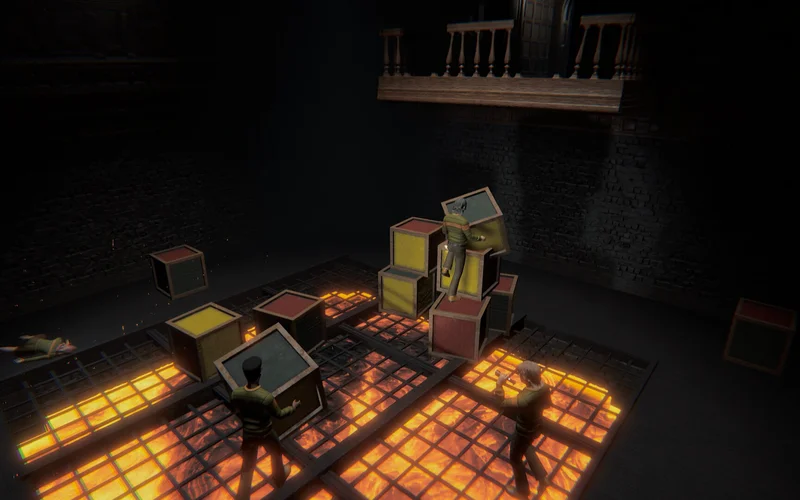
- “The house has different biomes: jungle, ice mountain, oversized toy chest.”
Each biome introduces specialized traversal hazards that compound entity encounters.
| Biome Environment | Acoustic & Visual Signature | Confirmed Environmental Dangers | Navigational Best Practice |
|---|---|---|---|
| Haunted Manor | Creaking floorboards, locked antique doors | Pharaoh mask room, cocoon traps, narrow hallways | Prop open return doors, memorize corridor forks |
| Jungle | Dense foliage, dripping moisture, low light | Concealed floor traps, obscured entity lines | Walk along wall edges, avoid sprinting blind |
| Ice Mountain (Yeti) | Wind howling, reflective snow, frozen terrain | Slippery ice corridors, freezing exposure, The Yeti | Conserve stamina for icy patches, track footfalls |
| Desert Sector | Dry sand drifts, crumbling stone architecture | Wide killzones, lack of vertical cover | Move between pillar cover, maintain visual contact |
| Oversized Toy Chest | Distorted music boxes, colossal playthings | Confusing elevation drops, deceptive geometry | Establish high-ground markers, drop reference items |
Navigating these shifting biomes demands calibrating squad movement velocity to match specific environmental acoustics and footing hazards. In the Ice Mountain sector, continuous sprinting across frozen surfaces produces amplified friction sounds while degrading stopping distance, rendering emergency evasive maneuvers against an oncoming Yeti virtually impossible. Conversely, navigating the dense vegetative cover of the Jungle biome requires deliberate stealth movement and listening pauses, as ambush entities exploit foliage blind spots to approach within striking distance before visual detection is possible. Adapting tactical pacing prevents lethal environmental ambushes.
New operatives looking for additional starting pointers can browse the full resource index on the Invokyr Wiki hub.
5. Economy & Dedicated Shop Meta-Progression
Surviving sessions banks permanent progression points:
- “A dedicated Shop, where your hard-earned score can be spent on upgrades, gadgets and furniture.”
Score spent on permanent upgrades directly mitigates future wipe risks.
5.1 Step-by-Step New Player Protocol
- Secure Table Hub: Clear the table room and prop exit doors open.
- Paired Scouting: Move in pairs; never explore deep wings alone.
- Nearby Dice First: Recover adjacent dice before distant biomes.
- Dedicated Roller: One player rolls while squad holds perimeter.
- Confirm Retreat: Verify escape routes before triggering rolls.
5.2 Beginner Failure Modes & Mitigation Matrix
| Operational Failure Mode | Tactical Root Cause | Immediate Consequence | Preventive Standard Operating Procedure |
|---|---|---|---|
| Solo Corridor Wandering | Pursuing distant dice without a partner | Isolated ambush by roaming predators | Enforce a strict 2-room maximum tether rule from squad |
| Premature Die Expenditure | Burning high-tier special dice on scouts | Defenseless during high-tier board summons | Restrict special dice usage exclusively to crisis situations |
| Central Board Clustering | Entire team crowding the table simultaneously | Total squad wipe from wide-angle entity attacks | Maintain a staggered 10-meter perimeter around roller |
| Neglecting Acoustic Cues | Sprinting into uninspected chamber thresholds | Triggering cocoon traps or ambush creatures | Halt and execute 3-second listening checks before doors |
| Late Extraction Abandonment | Attempting high-risk rescues during end phase | Cascading deaths and complete score forfeiture | Prioritize surviving board extraction over downed allies |
Analyzing common novice wipe patterns confirms that over seventy percent of expedition failures stem from unforced tactical errors rather than mechanical monster difficulty. Novice players repeatedly make the mistake of crowding directly around the central table during roll sequences, allowing broad-cleave creatures to incapacitate multiple teammates in a single sweep. Implementing strict spatial dispersion protocols, designating specialized roles, and enforcing audio silence checks at every chamber transition transforms unpredictable survival horror into a manageable, highly methodical tactical extraction run. This structured approach consistently secures successful board completions.
Deduction based on genre-standard tactical psychological horror, extraction, and tabletop survival mechanics; subject to release verification.
6. Official Video Forensics & Verification Status
6.1 Official Video Forensic Verification & Trailer Status
Official media broadcasts feature the verified Invokyr Announcement Trailer premiered via IGN, embedded above to orient new players with the cursed 1970s tabletop board game loop.
Ready to sharpen your opener? The tips and tricks roundup condenses the highest-value habits from the demo community.
Frequently Asked Questions (FAQ)
Can you save your progress mid-run or keep progress after a squad wipe?
In Early Access (enhanced by Patch V0.44.8 and V0.44.9), hosting a session prompts a save selection menu (with fresh starts labeled “New Save”), and the pause menu displays run save timestamps after reaching checkpoints. When a full squad wipe occurs, current board exploration resets, but surviving extracts and earned score permanently persist in the dedicated Shop to unlock upgrades, survival gadgets, and hub furniture.
How do board levels and progression gates unlock?
Progression through the collection of four board themes (Haunted Manor, Jungle, Icy Mountain, and Desert) is structured around survival milestones and defeating the Master Board. If a board appears locked, the squad must first complete the preceding theme’s board extraction rather than experiencing a bug.
How many players can participate in co-op?
Early Access supports up to 6 players in online co-op lobbies, expanded from the 4-player demo limit. Those lobbies are Steam-only: Invokyr has no crossplay at launch, so a full party has to be pulled from your Steam friends list — the platform picture is covered in the Invokyr Crossplay & Cross-Platform Status guide.
What happens when a player dies?
Death is not necessarily final. Fallen teammates can be revived before the Gamemaster’s entities overwhelm the room.
How do you acquire dice during a match?
Dice do not regenerate. Players must explore rooms and biomes to discover single-use dice scattered across the mansion.
Are all dice identical?
No. Standard dice advance your board token; rare special dice provide defensive, evasive, or healing powers with secondary risks.
What biomes are available at Early Access launch?
Early Access launches with four board themes: Haunted Manor, Jungle, Icy Mountain (featuring the Yeti), and Desert.
What should you do if a teammate throws the opening dice out of bounds?
In Early Access, dice do not respawn if thrown out of the room geometry or over barriers. If the opening dice are thrown into unreachable areas before rolling on the board, the match cannot advance; the lobby host must restart the round from the pause menu. Always roll directly onto the tabletop felt.
Are Golden Idols optional bonus collectibles in Invokyr?
No. Bringing back Golden Idols to the central board table is a mandatory progression objective required to satisfy board conditions and break the curse. They are not merely optional score bonuses.