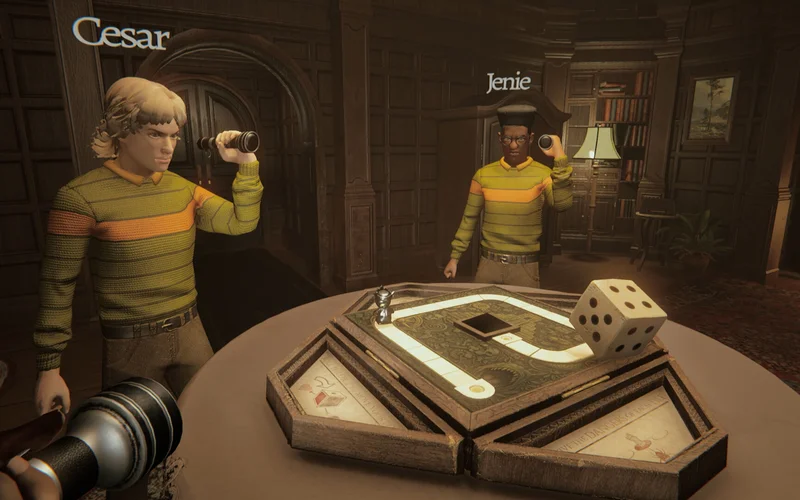
Core Dice Mechanics in Invokyr
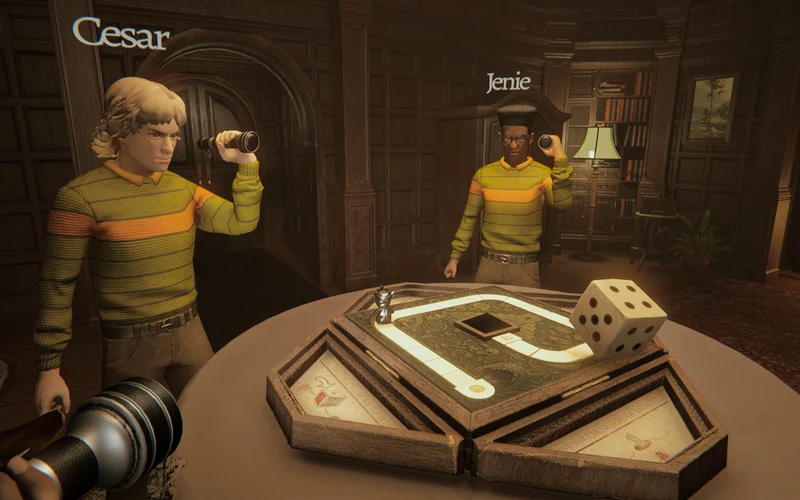
In Invokyr, rolling dice is not a free or infinite action. Progression across the central cursed 1970s board requires physical dice that players must actively locate within the labyrinthine house.
- “Scour the house to recover the dice hidden within. Each can only be used once. Choose wisely.”
- “Some dice offer powers to heal, hide, or hinder those who hunt you, but nothing comes without risk.”
| Dice Archetype | Official Mechanism | Inherent Systemic Backlash | Strategic Operational Role |
|---|---|---|---|
| Standard Movement Die | Physical single-use consumable pickup | Consumed permanently upon table roll | Advances token toward extraction chamber |
| Healing Die | Restores critically incapacitated player | Emits distinct acoustic beacon to entities | Post-encounter medical stabilization |
| Hiding Die | Temporarily masks visual line of sight | Severe speed and vision restriction | Breaking aggressive predatory pursuit |
| Hindering Die | Snares or delays chasing Gamemaster entity | Potential room door lockout traps | Bottleneck corridor defense during escape |
| Teleportation Die | Emergency spatial displacement across rooms | Random landing destination uncertainty | Last-ditch escape when trapped in dead-ends |
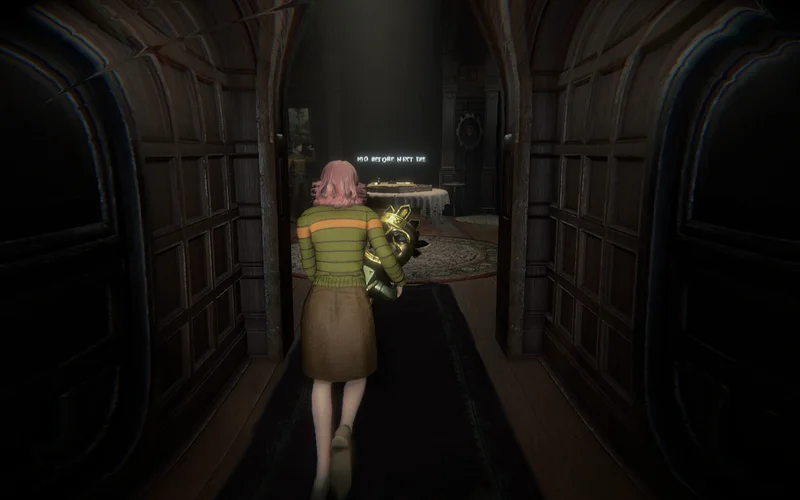
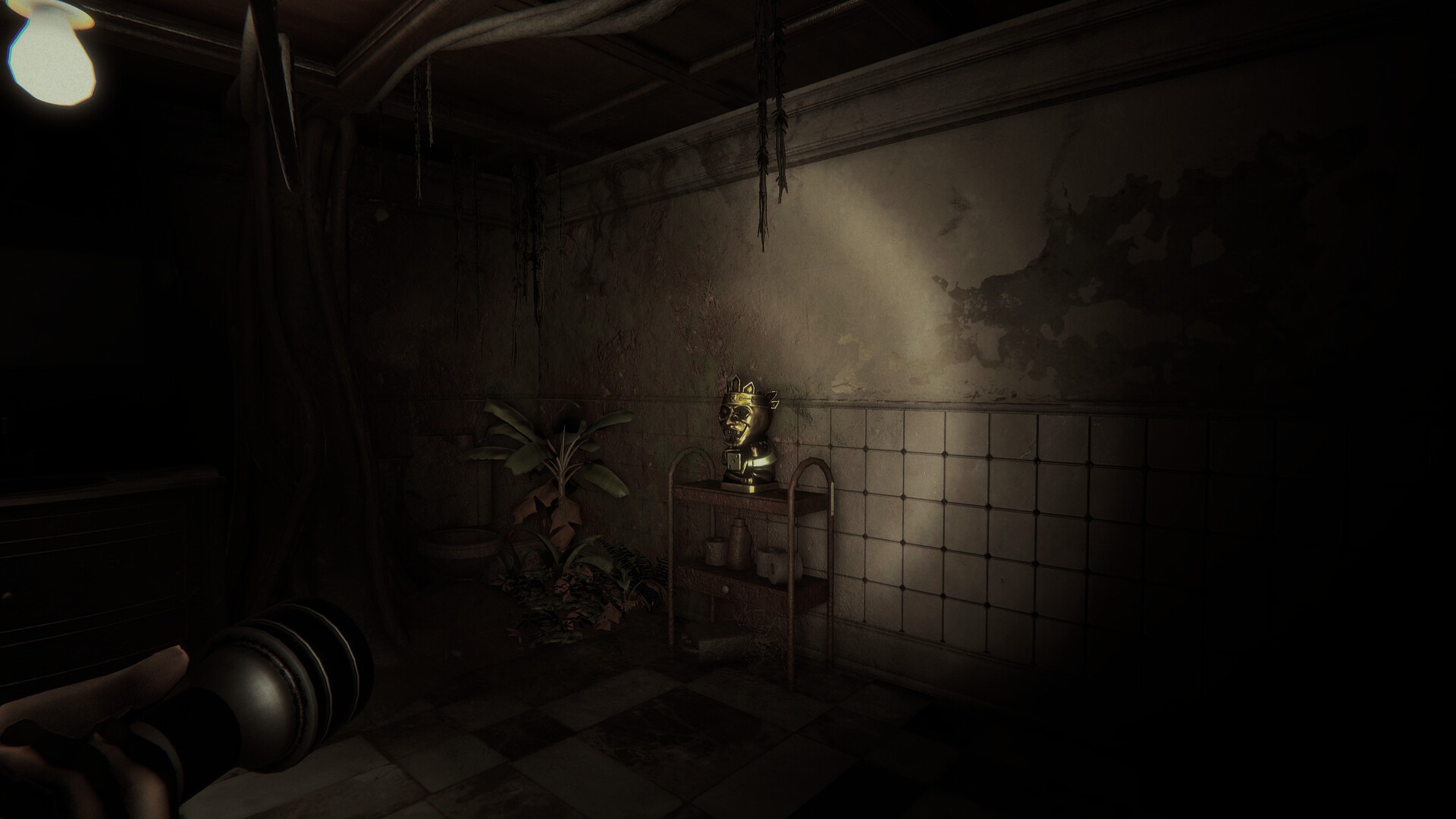
| Golden Idol Artifact | High-value secondary recovery objective | Requires two hands to carry; disables tools | Massive end-of-run score multiplier |
From an operational standpoint, this dice taxonomy defines the core tension between expedition greed and tactical survival. Standard dice drive board completion, but every step forward expends an unrecoverable resource that requires dangerous exploratory sweeps. Utility dice provide game-saving defensive interventions, yet their secondary backlashes prevent squads from relying on them routinely. Squads that master dice management establish clear role boundaries, ensuring utility dice remain in the hands of dedicated vanguards while standard movement dice are immediately consolidated at the central board table.
1. Single-Use Economy & Resource Scarcity
Because dice cannot be reused, squads must treat every chamber search as a high-risk extraction run.
1.1 Managing the Single-Use Consumption Rate
Teams must calculate the exact number of dice required to reach safe board thresholds before exposing scouts to distant wings.
| Board Distance Phase | Target Dice Reserve | Required Exploration Depth | Threat Tier Level |
|---|---|---|---|
| Early Game (Tiles 1-5) | 2 to 3 Standard Dice | Rooms immediately adjacent to hub | Low; ambient audio cues only |
| Mid Game (Tiles 6-12) | 4 to 6 Standard Dice | Secondary hallways and courtyard wings | Moderate; roaming predator on patrol |
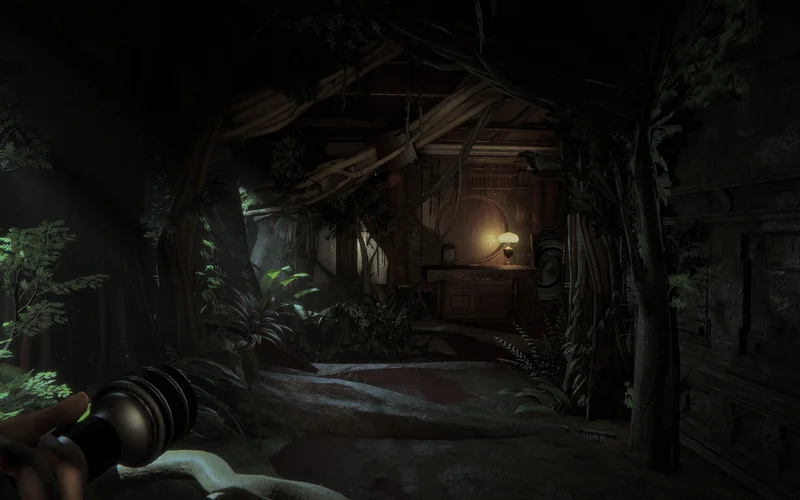
| Late Game (Tiles 13-18) | 6 to 8 Standard Dice | Deep biome sectors (Jungle, Mountain) | Severe; aggressive multi-entity summons |
| Final Sprint (Tile 19+) | 1 to 2 Reserve Dice | Board chamber exit corridor | Critical; relentless boss creature pursuit |
| Emergency Buffer | 1 Utility Die per pair | Carried by active exploration scouts | Adaptive; deployed exclusively in crisis |
Analyzing consumption velocity reveals that squads face their highest failure rate during the transition from mid to late game. As board tokens advance past tile twelve, the distance between unexplored rooms and the central gaming table increases exponentially. Scouts who venture into deep biomes without a designated navigator easily lose their bearings, turning minor navigational hesitations into fatal monster encounters. Maintaining a disciplined three-room tether to the central room minimizes backtrack travel time and keeps the squad within audible rescue distance.
2. Special Dice: Utility Countermeasures vs Hidden Hazards
Special dice provide game-changing active utilities, but understanding their trade-offs is essential to avoid fatal party cascades.
2.1 Tactical Healing: When to Risk the Acoustic Ping
Activating a healing die restores health or revives a fallen ally, but the accompanying sound cue alerts nearby entities.
| Utility Die Classification | Primary Tactical Benefit | Systemic Counter-Hazard | Optimal Usage Window | Prohibited Scenario |
|---|---|---|---|---|
| Heal Die | Revives critical teammate | High-frequency acoustic flare | Behind sealed double doors | Mid-chase in open hallways |
| Hide Die | Camouflages player model | Movement speed locked to crouch | Eluding line-of-sight hunters | Escaping high-speed Yeti charges |
| Hinder Die | Drops kinetic snare field | May jam adjacent sliding doors | Choke points and narrow stairs | Wide-open central board room |
| Chaos Die | Re-rolls board tile hazard | May summon higher-tier monster | Impending lethal squad wipe | Routine low-threat board rolls |
| Teleport Die | Instantly relocates user | May drop player in uncleared room | Cornered against dead-end walls | Carrying two-handed golden idols |
Evaluating these utility mechanics proves that deploying defensive dice requires situational discretion. Burning a hide die in a wide-open gallery is largely ineffective because the speed penalty leaves you vulnerable once the cloaking duration expires. Conversely, activating a hinder die in a narrow doorway effectively stalls chasing horrors, granting your squad the precious seconds needed to reach the board chamber and bar the door. Special dice must be treated as emergency insurance policies rather than casual gameplay shortcuts. Reserving high-tier utility powers for verified lethal encounters guarantees your squad maintains decisive escape options during late-session board pushes.
2.2 Dice RNG Weights & Curse Backlash Inversion Mechanics
Community discussions analyzing random number generation (“RNG On Dices”) and veteran walkthrough breakdowns highlight how dice probabilities and supernatural curses interact during tabletop turns:
- RNG Probability Distribution: Standard numerical movement dice follow balanced probability weightings, but advancing further along the board track introduces higher Gamemaster interference variables. As your token nears extraction tiles, the likelihood of triggering secondary hazard rolls alongside standard movement increases.
- Curse Backlash Inversion: High-tier utility dice carry a latent curse inversion risk under chaotic House Rules or when retrieved from cursed pedestals:
- Inverted Heal Die: Activating a cursed healing die can trigger an intense acoustic pulse that broadcasts the user’s coordinates to roaming predators throughout the wing.
- Inverted Hide Die: A corrupted hiding die restricts peripheral vision while emitting an unnatural silhouette, making stealth ineffective against acute sensory hunters.
- Inverted Hinder Die: Deploys a localized snare field that slows operatives if crossed, potentially obstructing squad withdrawal through choke points.
- Mitigation Protocol: Always examine recovered dice before carrying them to the board table. Dice exhibiting dark runic striations or abnormal audio hums should be quarantined or held exclusively by designated rear-guard decoys.
2.3 Healing & Resurrection Dice Balance Dynamics
Veteran community walkthroughs and creator analyses emphasize the pivotal tactical impact of restorative dice:
- Radius Revive Power: Field impressions confirm that Restorative (Healing) dice function as high-value area-of-effect tools capable of stabilizing down operatives and even reviving fully incapacitated squadmates within their activation radius.
- Acoustic Risk Tradeoff: Because resurrection dice emit high-frequency auditory resonances that draw the Gamemaster’s entities across adjacent chambers, deploying them in open hallways without perimeter door wedging frequently invites immediate predatory counter-attacks.
- Squad Resource Discipline: Teams should reserve healing dice for designated medic operatives rather than burning them on minor scratch damage, ensuring that catastrophic squad wipes in late-game board pushes can be reversed in a single coordinated activation.
3. Team Inventory Logistics & Role Distribution
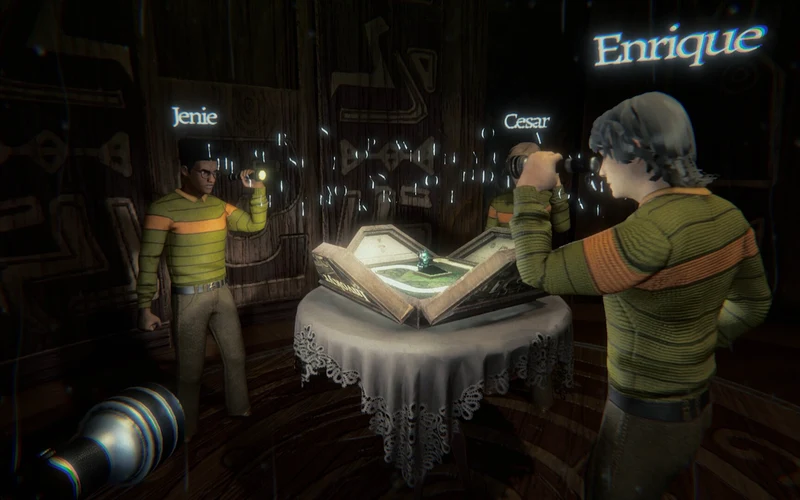
Invokyr officially supports online co-op with up to six players. Distributing dice across the squad determines expedition efficiency.
3.1 Stealth vs Hinder: Choosing the Right Escape Die
Different squad roles require tailored loadouts to optimize survival during high-threat Gamemaster manifestations.
| Squad Specialization | Max Dice Capacity | Assigned Dice Types | Primary Mission Directive | Secondary Responsibilities |
|---|---|---|---|---|
| Board Anchor | 4 to 5 Standard Dice | Numeric Movement Dice Only | Guard table and execute rolls | Monitor mansion audio signals |
| Lead Scout | 1 Utility Die | Hiding or Teleport Die | Penetrate unmapped rooms | Tag dice locations for runner |
| Dice Runner | 3 Standard Dice | Numeric Movement Dice | Transport dice back to anchor | Maintain line of sight with scout |
| Entity Decoy | 1 Utility Die | Hindering Die | Draw entity aggro away from hub | Lead monsters into looped paths |
| Squad Support | 1 Utility Die | Healing Die | Provide rear-guard security | Execute stealth revivals |
Examining squad logistics underscores why inventory hoarding leads to total team wipes. When an individual player carries multiple utility and movement dice, their death strips the entire squad of progression resources. The safest protocol distributes standard dice immediately to the Board Anchor while allowing forward scouts to carry only a single defensive utility die for personal survival. This distributed inventory model ensures that even if an exploratory vanguard falls, the remaining team retains the means to advance the board. Establishing strict item ownership prevents catastrophic resource forfeiture across deep mansion biomes.
4. 3D Physical Dynamics & Geometric Collision Protocols
Unlike traditional digital board games where dice rolls occur in abstract menus, Invokyr treats dice as physical 3D objects governed by physics.
4.1 Physics Collision Fixes: From Patch V0.36.10 to V0.37.10
Early demo playtests revealed that physical dice could become trapped in complex manor geometry.
| Physics Surface Vector | Collision Interaction | Geometric Snag Risk | Recommended Recovery Action |
|---|---|---|---|
| Felt Board Table | Controlled low-friction bounce | Negligible; designed roll zone | Standard overhand toss |
| Hardwood Flooring | High elasticity; long skids | Moderate; slides under dressers | Crouch and grab through low clearance |
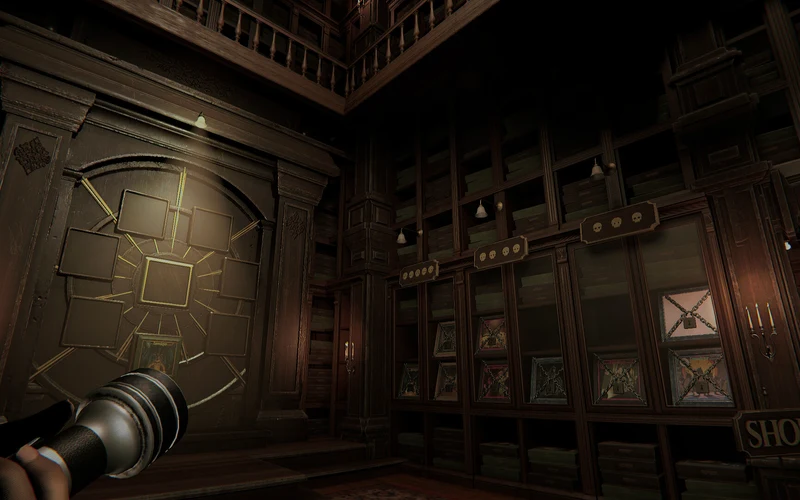
| Decorative Bookshelves | Irregular mesh collision | High; wedged between books | Jump-crouch or nudge with physics props |
| Carpeted Corridors | Damped bounce; quick stop | Low; easily spotted against wool | Sweep center line of hallway |
| Threshold Transitions | Bounces across door seams | Severe; lost behind closing doors | Retrieve die before triggering door close |
Understanding physical collision behavior is critical during frantic board room defense. Official Patch V0.36.10 addressed numerous collision bugs where dice clipped into furniture hitboxes. However, if a die bounces off the table and lands behind a dresser, players should not panic or abandon the run. Approaching the object while crouched and nudging adjacent movable props usually frees the trapped item. Maintaining a steady, downward-angled rolling motion directly onto the felt board surface prevents unwanted ricochets and preserves run pacing.
4.2 Official Patch V0.44.7 Blessed Dice & Cursed Idol Refinements
Official Early Access launch updates in Patch V0.44.7 and Patch V0.44.9 introduced key visual and interaction fixes to physical dice mechanics:
- Gather-Die Zone Change Teleport Fix (Patch V0.44.9): Resolved an issue where picking up or holding gathering dice across environmental transition thresholds could result in erratic character teleportation.
- Boulder Event Difficulty Tuning (Patch V0.44.9): Developers adjusted sprint corridors and collision leeway during the rolling Boulder event, making evasion slightly easier for escaping squads.
- Blessed Dice Visual Cleanup (Patch V0.44.7): Resolved a bug where Blessed dice mistakenly stayed highlighted yellow for dead or downed players after being thrown. Now, only active living throwers track legitimate glowing visual outlines.
- Musical Idols Rhythm Window (Patch V0.44.7): Developers expanded the interaction timing window for Musical Idols, allowing squads more generous rhythmic reaction buffers when synchronizing audio prompts.
- Cursed Idol Inversion Safeguard (Patch V0.44.7): The Inverted Controls Idol has been officially prevented from spawning alongside the high-speed Boulder Event, removing unpreventable death cascades.
Additional mechanical breakdowns and resource tables are organized across the Invokyr Wiki hub.
5. Step-by-Step Dice Recovery & Rolling SOP
Executing a flawless dice cycle requires disciplined coordination between scouting and rolling phases.
| Cycle Step | Mandatory Squad Action | Immediate Threat Indicator | Emergency Abort Protocol |
|---|---|---|---|
| 1. Chamber Sweep | Check desks, display cases, and corners | Whispering audio or light flicker | Retreat to previous verified chamber |
| 2. Type Identification | Distinguish numeric from utility dice | Glowing or textured glyph surface | Announce die type across team voice |
| 3. Secure Transport | Walk along wall edges back to board | Heavy thudding footsteps nearby | Freeze in place; break line of sight |
| 4. Hub Consolidation | Transfer dice to designated roller | Sudden door locking sounds | Man all room entryways immediately |
| 5. Roll Execution | Roll dice on table; advance token | High-frequency board hum and flare | Scatter to pre-designated defensive spots |
Following this five-step standard operating procedure guarantees that your squad never triggers a Gamemaster event while vulnerable. Rolling while scouts are returning through unlit corridors is the single most common cause of early demo defeats. By establishing a strict policy that no roll is initiated until all squad members are physically present in the board room with doors secured, your team maintains total control over when monster summon events occur. This disciplined operational tempo maximizes team survivability throughout escalating endgame trials.
Deduction based on genre-standard tactical psychological horror, extraction, and tabletop survival mechanics; subject to release verification.
6. Official Video Forensics & Verification Status
6.1 Official Video Forensic Verification & Trailer Status
Official Steam community announcements reference the “Invokyr - Official Early Access Release Date Trailer” published on September 8th, 2026. However, in strict accordance with site forensic integrity standards, third-party YouTube mirrors and unverified external uploads are intentionally omitted from this guide. Only verified official developer feeds and direct Steam store multimedia assets are referenced to ensure zero broken embeds or unauthorized content distribution.
Frequently Asked Questions (FAQ)
Can dice be reused after rolling at the board?
No. All dice in Invokyr are strictly single-use. Once rolled at the central board table, they are permanently consumed from inventory.
Do special dice advance your token on the board?
No. Special dice provide active tactical powers (healing, hiding, or hindering entities) and are not used for advancing along the board track.
What should you do if a die gets wedged in furniture?
Crouching next to the furniture and jumping or nudging nearby physical props can dislodge the item, as verified in patch notes following Patch V0.36.10.
How many dice can a single player carry?
Inventory slots are limited. Players should dedicate at most one or two slots to utility dice while delivering standard dice to the board anchor.
What are golden idols used for?
Golden idols are high-value secondary objectives that boost your post-match score in the dedicated Shop, but require two hands to carry.
Can rolling the dice summon monsters immediately?
Yes. Rolling the board dice can trigger unpredictable Gamemaster events, including direct monster summons and environmental trap activations.